
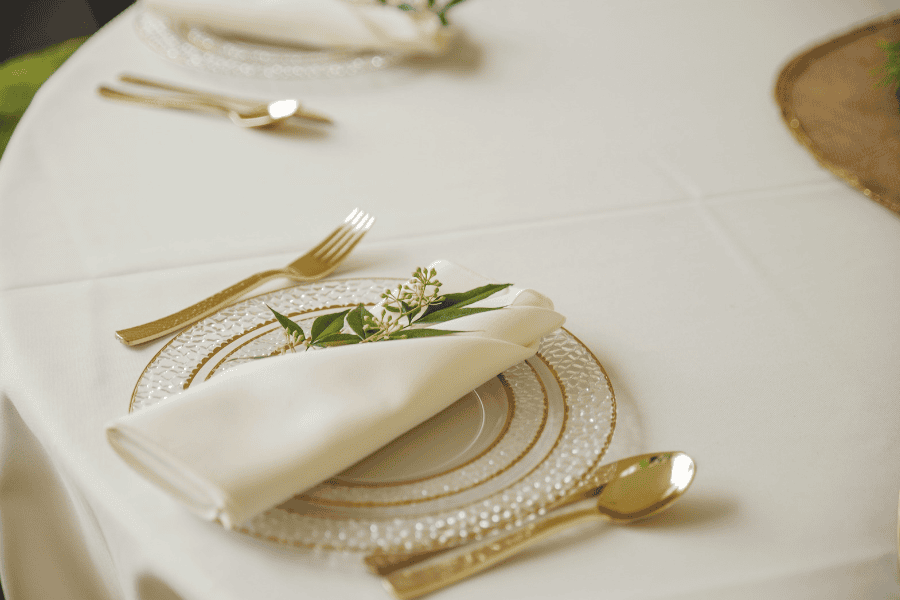
A well-dressed table can turn a plain room into a space that feels considered, welcoming and ready for guests. For weddings, work celebrations, charity lunches and family parties, the linen often provides the visual foundation for everything else in the room. It influences how colours appear, how decorations sit and even how polished the photographs look.
Quality matters here because event linen has a practical job as well as a decorative one. The right fabric covers worn surfaces, absorbs small spills and helps separate dining areas from the rest of a busy venue.
Start with the atmosphere you want to create
Before comparing fabrics or measuring tables, decide how you want the event to feel. A crisp white setting can suit an awards dinner, whilst warm neutrals create a softer look for a family celebration. Deep green, navy or burgundy may work well at an evening event, particularly when paired with simple crockery and gentle lighting.
Your colour choices affect more than the overall style. Pale shades can make a compact venue feel brighter, whilst darker tones help a large hall feel more intimate. If the room already has patterned wallpaper, coloured chairs or a strong carpet, a restrained table colour will prevent the design from becoming too busy.
Think about the experience from a seated guest’s point of view too. Tall centrepieces and dramatic floral arrangements may look impressive from the doorway, but they can block conversation across the table. Linen offers a quieter way to add colour and texture without creating visual barriers.
It helps to collect samples of the invitation, napkin, table linen and floral colours before placing an order. Look at them together in daylight and under warm indoor lighting. Colours can shift noticeably between the two, particularly cream, grey and pale pink. A quick test can save you from discovering an unwanted clash on the morning of the event.
Choose linen that can handle the occasion
Appearance matters, but event linen also needs to cope with several hours of use. Guests will move glasses, rest handbags against table edges and occasionally spill food or drinks. Thin fabric may slide around, reveal the surface beneath or lose its shape once the room becomes busy.
When you’re ready to compare options, look for tablecloths with qualities such as absorbency, stain release and colour retention. These features are useful for event planners, hospitality businesses and individuals arranging a wedding or special meal, especially when the linen needs to look presentable throughout a long service.
Ask for a fabric sample if one is available. Hold it up to the light to check its opacity, then place it over a surface similar to the venue’s tables. Rub the fabric gently between your fingers and see how easily it creases. A material that marks heavily during handling could require more preparation after transport.
The planned menu should influence your decision as well. White linen creates a classic background but shows tomato sauce, coffee and dark crumbs quickly. Mid-tone colours are more forgiving at relaxed family events or buffets. For formal dining, absorbent fabric can help contain a small spill before it reaches a guest’s clothing or drips onto the floor.
Check the relevant fabric care labels before ordering. Washing temperatures, drying instructions and ironing limits will affect how practical the linen is, particularly if you expect to use it again.
Get the size and drop right
Correct measurements make even a simple setting look properly finished. A cloth that barely covers the table edges can appear borrowed or improvised, whilst one that trails too far may catch under chairs and create difficulties for guests.
Start by confirming the shape and dimensions of every table with the venue. Don’t rely on labels such as “standard round” because sizes vary. Measure the width and length of rectangular tables, or the diameter of round ones. Then decide how far you want the fabric to hang below the tabletop.
For a relaxed lunch, a drop of around 20 to 30 cm often looks neat and leaves plenty of room around guests’ knees. Formal dinners may use a longer drop, sometimes reaching close to the floor. If you choose the latter, check that the fabric won’t gather around chair legs or cover power cables running beneath display tables.
Square cloths can be layered over round ones to introduce a second colour without adding bulky decorations. This works particularly well on cake tables, welcome desks and gift stations. Test the positioning before the event because the corners need to fall evenly.
Allow for more cloths than the number of tables in the room. One or two spares can cover a late layout change, an unexpected stain or a damaged item. Label the sizes clearly when packing them so helpers don’t have to unfold every piece during set-up.
Build a polished look without overloading the table
Once the linen is in place, use it to guide the rest of the styling. A textured or richly coloured cloth already carries plenty of visual interest, so plain napkins and modest centrepieces may be enough. Smooth neutral linen gives you more room for patterned stationery, bright flowers or colourful glassware.
Keep practical space around each setting. Guests need somewhere to place their hands, move a glass and put down shared dishes without disturbing the decorations. As a basic test, set one complete place at home or at the venue. Include everything that will appear during the meal, from side plates to water jugs, then see how comfortably you can sit and reach.
Consider accessible seating during the layout stage. Long hanging fabric must stay clear of mobility aids, and table decorations shouldn’t restrict sight lines. If children are attending, avoid loosely draped corners that can be pulled from the table. Secure clips may help at outdoor events, provided they remain hidden and don’t damage the material.
Repetition creates a professional finish without requiring an elaborate budget. Use the same napkin fold, centrepiece height and spacing across the room. For a large event, photograph one approved table and share the picture with everyone helping to set up. That visual reference is often clearer than written instructions and helps the final room look consistent.
Plan for set-up, spills and clearing away
Even beautiful linen can look untidy if it arrives crushed or gets placed in a rush. Build table dressing into the event timetable instead of treating it as a final ten-minute task. Large cloths usually need two people to position them evenly, particularly on round tables or long banqueting arrangements.
Transport clean linen in lidded boxes or garment-style bags, with each size packed separately. Avoid tightly overfilling containers because deep creases may be difficult to remove at the venue. If steaming is permitted, test the equipment on an unseen area and follow the care instructions. Schedule this work before flowers, stationery and glassware reach the table.
Prepare a small response kit for the event itself. Clean white cloths, absorbent towels, a stain treatment suitable for the fabric and spare napkins will deal with common problems. Staff or helpers should blot spills promptly instead of rubbing them, which can spread the mark through the fibres.
Clearing deserves its own plan. Shake off crumbs in an appropriate service area, separate damp pieces from dry ones and keep heavily stained linen in a labelled bag. Never leave wet fabric sealed for a long period because odours and mildew can develop. Record damaged or missing pieces before everything goes to the laundry.
If the linen will be stored, wash and dry it fully first. Fold it along consistent lines and keep it in a cool, dry cupboard away from direct sunlight, which can fade coloured fabrics.
Make quality work for your budget
Table linen can account for a noticeable part of an event budget, but the cheapest option may bring extra work. A fabric that needs repeated pressing, shifts during service or shows the table underneath can cost time during set-up and affect the finished result.
Focus spending where guests will notice it most. Dining tables, the cake table and the main welcome area usually appear in photographs and receive close attention. Back-of-house surfaces and hidden preparation stations can use simpler coverings as long as they’re clean, secure and suitable for the job.
Hiring can make sense for a one-off event, especially if the supplier includes cleaning. Buying may offer better value for venues, community groups or families that host several gatherings each year. Work out the cost per use and include laundering, storage and replacement in the calculation.
Reusable linen can also reduce reliance on disposable coverings. Guidance on reusable textiles can help organisers think about product life, care and waste as connected issues. Reuse only delivers its full value when items are durable enough to survive cleaning and are stored correctly between events.
Before approving the order, create one complete sample table and photograph it from standing and seated positions. If the cloth hangs evenly, the chairs move freely, and the place settings have enough room, you’ve solved most of the problems that tend to appear during event set-up. That small rehearsal leaves the event team free to focus on guests when the doors open.
on October 29, 2026



0 Comments