

As a busy mother myself, I can assure you that being a virtual assistant (VA) is a great job to have alongside family commitments, such as the school run and odd daily chores. However, with almost half of married women doing more than 13 hours of household chores each week1, it’s no surprise that sometimes home-based businesses suffer.
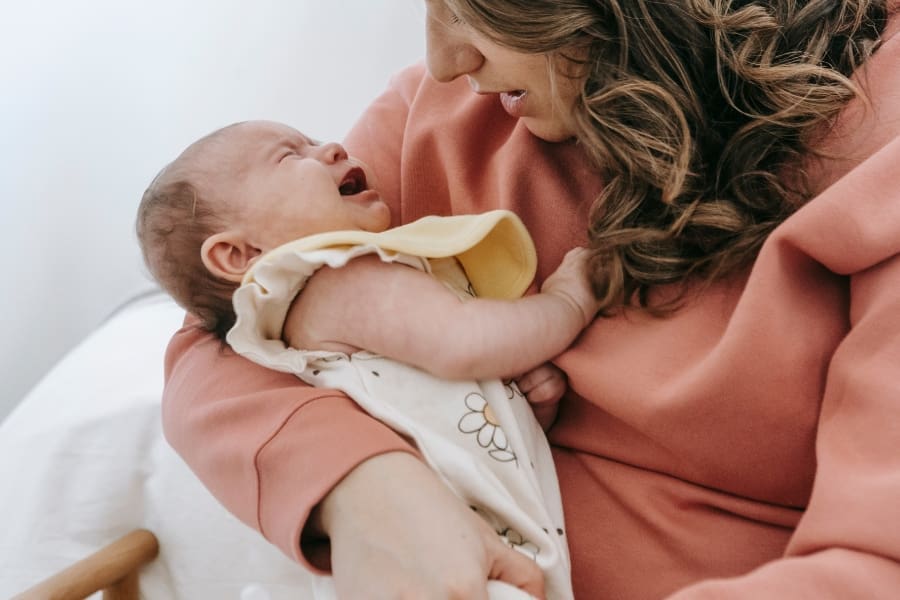
Stereotypically, when people imagine a VA, they often picture a stay-at-home mum, trying to work whilst looking after teething babies or crying toddlers. This picture gets painted time and again when people talk about VAs. Whilst I agree on the female aspect, with 99% of VAs being women2, I would instinctively challenge the rest of this generalisation.
SVA Annual Survey
Instincts aside, I set out to factually reveal just how much of an impact being a mum has on home-based VA businesses. I decided to address this topic head-on through annual surveys from the Society of Virtual Assistants (SVA).
Each year, the SVA takes a snapshot of the VA industry and presents findings through its UK Virtual Assistant Survey. This survey of real VAs looks at everything from how much they earn to what marketing methods work best. The results are always an interesting read…
It was time to find out once and for all whether the Mummy VA is a reality or a “Mummy Myth” (as I call it!).
One of the core topics researched through the SVA is to do with working mums. Firstly, are VAs typically mums? Secondly, are they working without childcare in place, juggling their commitments? And finally, does this affect income?
The Mummy Myth
We’ve now asked these questions three years in a row through surveys and the results are fairly consistent:
* Just 35% of VAs are mums with young children (under 12)
* The percentage of WAHMs (work at home mum) who have no childcare in place is 1.5% of the industry – which has fallen in the last 2 years from 3-4%
So there you have the “Mummy Myth”. This stereotype is fantasy. The number of WAHMs without childcare in place is actually comparable to the amount of men working in this https://premier-pharmacy.com/product-category/birth-control/ female-dominated industry at just 1%. The drop in VAs without childcare in place would suggest that it’s not sustainable to run a successful VA business without childcare – these VAs have clearly either left the industry or decided to put childcare in place.
Do mothers with young children earn less?
This led me to wonder whether mothers with young children earned less.
Our most recent SVA survey (v5) looked at the rates mums charge compared to the non-mums. The mums without childcare were earning over 24% less than the average VA rate.
You could argue that the hours available to work are hampering their earning potential – that is, until you look at what other VAs working the same amount of hours earn, and the mums without childcare are still earning 20% less than those working similar part-time hours.
Fact: If you want to earn a living from being a VA with young children, childcare is essential for success.
Understandably, it’s hard when you’ve perhaps voluntarily opted out of the traditional workforce in order to look after children. You have to be able to justify the increased cost of childcare versus your (hopefully!) increased income. The SVA research would suggest you can charge more if you have more consistent working hours in place.
If you have any questions about juggling your VA business with home life responsibilities or would like to find out more about the SVA, please visit www.societyofvirtualassistants.co.uk or email info@societyofvirtualassistants.co.uk.
1 Source: Institute for Public Policy Research 2012
2 Source: UK Virtual Assistant Survey v5
 Author: Caroline has been a Virtual Assistant (VA) since 2004 in her business, Virtually Sorted. Virtual assistance in the UK was a fledgling industry in 2004, so she worked with a collection of VAs to educate the business community about virtual working which grew rapidly into the Society of Virtual Assistants in 2006. In her role as founder of SVA, she has previously judged the VA of the Year Awards, runs the UK VA Survey each year and is the UK representative of the world’s first virtual assistant certification programme, VAcertified.


0 Comments