

Jane Michell runs Jane Plan, a business that has quickly grown from the kitchen table to a large business with thousands of clients, and 4 employees. She is the main breadwinner in her family and also has 3 children between 10 and 18. How does she manage to do it all? We scheduled a call with Jane. She speaks to us on the hands free, while she drives home from work, to make best use of her time.
 Why did you start your own business?
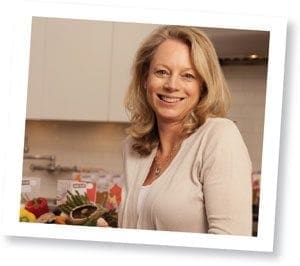
Things weren’t going so well for my husband at the time, and I wanted to step up to the mark, take responsibility for our family finances and contribute financially in a much more significant way than I had done before.
At that time I was working as Director of Nutrition in a hospital, and my department was managing weight loss programmes. It was a good job, and I worked mainly school hours, but it didn’t contribute enough to provide for my family’s West-London lifestyle, with 3 children, private school and a couple of holidays a year.
The idea for the business came from several things that came together in my mind. In my work I felt personally disillusioned that a lot of the people we were treating were referred for surgery (gastric bands etc.) . Professionally I also felt disillusioned as there are a wide range of diet plans available that range from :’very good and very expensive’ to ‘not good at all’. I felt women were victims of the diet industry, and that really annoyed me. I wanted to do something about that. In addition I have a personal history of weight-loss too.
So I started building on my own experience and my professional expertise to develop Jane Plan, a weight loss programme. When I started, two and a half years ago, I worked from my own kitchen, and my clients were my friends. But now I have my own premises, two kitchens and work with a number of food suppliers. We do a personal consultation, develop a tailor made diet, and deliver the food daily to our clients’ home or workplace.
Taking on financial responsibility has worked. I have found, though, that the more financial responsibility you take on, the more you have to live up to it.
What does a typical day look like for you?
I typically leave at 7 am for the office, only to return home by 8 or 9 pm. I work Monday to Friday, and 3-6 hours on both Saturday and Sunday too. If this was a lifestyle job, I could shut up shop at 3pm and ignore the ringing phone. However I am in the unexpected position of being the breadwinner and can’t afford that, so I make long working hours. I have to say I love my job too – so working such long hours is not too onerous!
What kind of support have you got at home?
My husband leaves just after me in the morning, and comes home about the same time. We don’t have childcare. Basically the children look after themselves. The youngest, who is 10, travels independently, and often pops into the supermarket to buy dinner for everybody. In the evening the children cook their own dinner. My husband gets something himself or gets leftovers when he comes home from work.
Up till recently we also had a cleaner, but as we are now renovating she doesn’t come. – with the mess of the building project it wouldn’t be worth while. However, we normally do have someone to do the cleaning.
We do not have any family near, so unfortunately do not have any support there.
How do you manage support after school, with homework or during the holidays?
I have not had summer holidays for the past 2 years. In half-term I organise play dates for the youngest, but he mostly organises them himself. My daughter, who is 16, is out with friends or studying in holidays and my eldest son plays sports or studies. The first year of the business the children went to the Isle of Wight and stayed with their grandparents in summer holiday. Last year my husband took them to Italy.
Homework isn’t an issue, as my youngest comes home after school and there is a culture of studying in the house. My daughter is doing GCSE’s this year, and my eldest son, who is 17, is doing his IB. So the youngest just joins in and does his homework, and the other two do help him.
They organise it all without me. For example, all my kids see an orthodontist, as I don’t have time to take them, so I order a minicab to pick them up from school and drive them there.
I am blessed with three of the most amazing children. As a mother, I feel I have failed them in the past 2 years. I am not sure how they have managed. I guess what happens is, they see me working really hard and feel a sense of obligation to do what I expect them to do.
I don’t think my eldest suffers from the current situation and the youngest perhaps a little bit. However my daughter in the middle takes on most of the burden. She tends to organise dinner, tidy up the kitchen and calls me in the office to organise domestic details: ‘I think he needs his rowing kit for tomorrow, where is it?’. I do manage the burden on her, and get cross with the boys that she gets to do the donkey work. It seems so unfair that it’s always the women that step up to the mark – even at the age of 16!
Now I keep my Friday nights free for some special time for me and my daughter. I take her out to a fun restaurant of her choice, e.g. in Notting Hill and we have some mummy-daughter time together. The boys don’t seem to need that sort of input as much, so I do different things with them.
In weekends I do watch the occasional sports match, and I take my youngest son to the school play of the eldest. So I find time for each one of them.
How did you manage when your children were younger?
When I had the first son I had a senior job in the BBC. When the baby was 6 months, I went back to work. That certainly was too soon, and I deeply resented being the only mother in my group of friends to return to work https://imagineear.com/pharmacy/generic-vardenafil/ already. My son was in a nursery, and although it was a wonderful nursery it wasn’t a positive experience for us. It was heart-breaking and he kept getting ill, so I had to take days off work all the time. I would recommend anyone in the same position to hire a nanny instead.
I had the next baby pretty soon, as I felt it would be economical to have the children close together to keep childcare costs down. I hired a nanny for the two of them and that was cheaper and worked out much better with my work.
When I had the third child the eldest was 7 and I gave up work for a year. I gave up the job at the BBC, as I felt it would interfere too much with my children’s lives. I re-trained as a personal trainer, just as something fun to do, and ran training programmes from my home. We had an au-pair to help out.
Following a course in Nutrition I found the job at the hospital, which was part-time and we had an au-pair to cover after-school care. I started working full-time again when the youngest was about 5. By then I was Nutritional Director. I worked mostly school hours at the hospital, so childcare and being there for the children wasn’t an issue.
When you started your own business, is this how you imagined it?
No, I started a business from home. I didn’t expect it to be like this. The business just grows and grows and has taken on a life of its own. It has powered forward and pulled me in. It’s such a pervasive presence, it’s always there, I talk about it all the time. It’s like a baby attached to my hip, it’s like my fourth child and I care passionately about it. To the point where I come home and my youngest son will ask: ‘How many orders did you get in today? Is your profit still okay?’
There’s nothing quite as dominant as your own business. The buck stops with you. I am responsible for 4 employees, clients, the rent of the location, the premises and everything else. If the locks break on the door, it’s my responsibility to get them fixed.
The biggest price I pay is the time I have lost with my children. That, to me, is the price of success. But you cannot run your own business with a part-time attitude. That’s just not how it works if you want real success, if you want to see your brand on the high street you have to work for it.
I don’t want it to be like this the rest of my life though. My end-goal is to make this a saleable business in the next 3-4 years.
Do you ever feel guilty?
I feel perpetually guilty. To me, motherhood is a state of guilt, I don’t manage it, I live with it. I deeply resent the time I miss with my children and am hoping it will be for the greater good. Perhaps in a couple of years they will be able to say ‘We are going off to mummy’s ski-ing chalet. It was my youngest sons Christmas wish ‘for mum not to make any work phone calls during Christmas’.
I would love to be a mummy that is at home, cooks meals, makes sure her children are well turned-out and has a beautiful home. The reality is I come home to that, and my children have been home organising it. But I do it like this, because I know there is no other option for now, I love my job and we rely on the financial income my business provides.
What do you hope for your own children?
My own daughter is currently choosing her A levels, and I have discussed work-life choices with her. I told her that if she chooses a career she needs to consider how it will fit around a family. She has got it all mapped out and certainly doesn’t want to do what I do. She would like to work in a hospital in her twenties, and then become a GP when she has children.
It was different for me, as I come from a generation that was told ‘You can have it all’. That is not true, you cannot have it all.
To be honest, I give my sons a different message. I tell them they need to step up to the mark and be responsible for their families. Interestingly, I don’t tell them they have to choose a career that fits around the family.
What would your advice be to other female entrepreneurs?
When you start out, do it with your eyes wide open. Do not underestimate the commitment required to make a business work and be prepared to make that sacrifice. Be prepared to work tooth and nail. You want to be sure you want to do that, as it will have quite an effect on your family. You are not going to have a work-life balance and be truly successful, have a good income and support your family.
However, it’s like when you are having babies and they are little. It is a phase in life. When you run your own business there will be phase in your life where you are going to run ragged.
My business has given me some of the biggest highs I have known in my life. I have changed as a person. I have become so much more confident, outgoing and together. I don’t take any crap anymore, I really don’t have time for that and feel I have truly changed for the better.
I genuinely think it is all worthwhile, but I know it will have come at a price. We live hard, and we play hard. The Friday nights with my daughter, for instance, are very special, and that special time would not have come my way if I had been at home more.
Both of my sons are incredibly proud of me. My eldest says ‘Mum, you really stand out from the mums in school and I wouldn’t want it any other way’. I do get tremendous support from my kids.
Personally, I love it, as I feel I could be on the cusp of something quite wonderful.
As we end the interview, Jane arrives home and she walks into the house. Her 10-year-old boy greets her enthusiastically and asks: ‘What shall I get you for supper mum?’
Interview by Inge Woudstra, Director Mum & Career


I do think she should spend more time with her children I also believe she has a husband that is able to provide a good standard of living.