
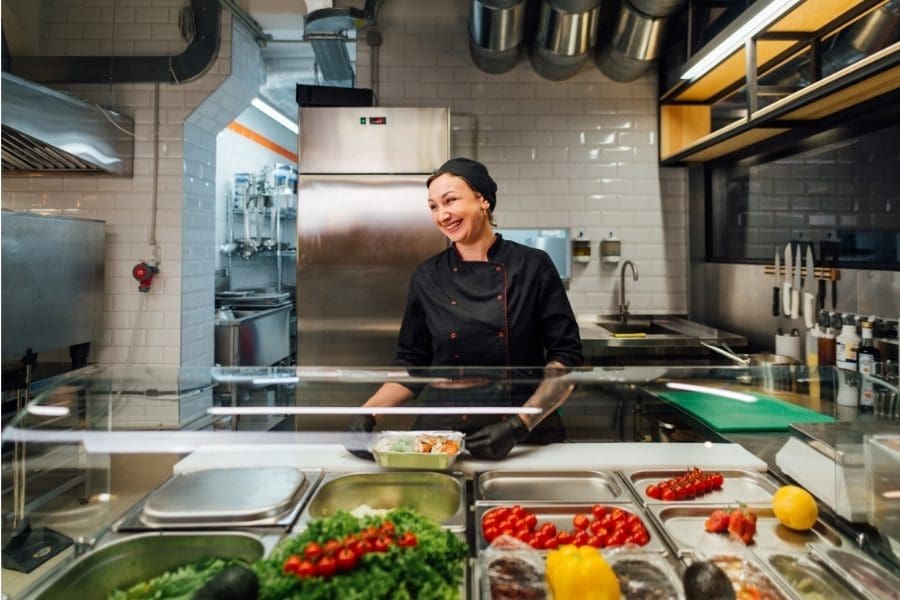
Whether you’re an experienced restauranteur or a novice in the catering game, one of your primary concerns needs to be hygiene.
If food is contaminated, it can expose those dining in your restaurant to harmful pathogens, endangering them and negatively impacting your business.
As a restauranteur, you have both a legal and moral duty to ensure a high standard of hygiene in your business. Here are some ways to achieve this.
Regularly Sanitise Surfaces and Equipment
Sanitising everything a customer or team member might encounter has become standard practice due to the pandemic. However, there are many more benefits to scheduling regular sanitisation into your work schedule than just preventing the spread of Covid-19.
Regularly maintaining and sanitising the equipment in your restaurant will dramatically improve food hygiene by minimising the risk of cross-contamination during food preparation. Additionally, it can help your business run more efficiently, reduce energy costs and lead to higher quality food thanks to regular care and maintenance.
When you’re planning your sanitisation routine, consider the hygiene and sterilisation equipment you plan on using. Golyath equipment is both effective and useable in a kitchen, and will help maintain a high standard of cleanliness in your restaurant both in the short and long term.
Store Food Safely
One of your primary concerns when improving hygiene in your restaurant should be how you store food. A high proportion of food contamination in catering businesses occurs as a result of improper storage. There are some basic food storage principles all restaurants should follow.
You should wash raw food items before storing them. Additionally, avoid using the same fridge for storing prepared foods and uncooked ingredients like meat and fish. You must also rotate stock regularly instead of accumulating a lot of items and overstocking your kitchen.
Poor storage solutions can often result in cross-contamination, especially in environments where foodstuffs like raw meat are handled around pre-cooked items.
Keep an Eye on the Temperature
Temperature control is essential for maintaining high food hygiene standards. Foods need to be prepared, served, and stored at the appropriate temperature to minimise the risk of bacterial propagation.
You must educate your staff about best practices when it comes to temperatures within the kitchen. Otherwise, you risk giving your guests food poisoning. Fridges shouldn’t be warmer than 5°C, and freezers must be colder than -18°C to prevent bacterial growth.
It is also a good idea to introduce temperature logs into your kitchen. By checking and writing down temperatures at regular intervals, you will be able to trace any fluctuations that might be hazardous and act appropriately to minimise the risk to your customers.
Conclusion
In summary, you must ensure that food hygiene is a priority in your restaurant business. Not only do you have a legal obligation to protect your customers, but you also risk losing business if diners do not trust the quality of the food you offer. Therefore, you must take steps to educate yourself and your staff about food hygiene and introduce measures to facilitate regulations.



0 Comments