

Women and babies
603,766 babies were delivered in NHS England hospitals during 2018-191. Although the NHS is one of the safest, most established healthcare systems in the world, mistakes do occur. The consequences of medical negligence could seriously impact physical and mental health and affect your ability to work and career progression.
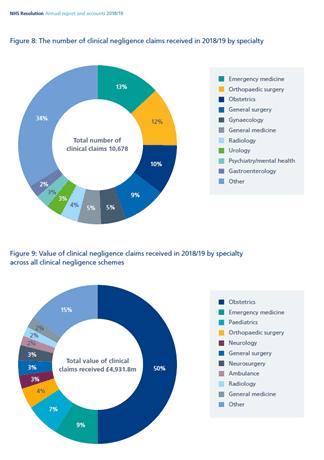
Childbirth is one such area where these mistakes can have devastating and lifelong consequences for the mother and her child. It is also places a huge financial burden on the NHS with maternity claims2 making up 10% of the medical negligence claims received in 2018/19 and 50% of the total value of the compensation paid out.
Why does childbirth go wrong?
Although the majority of babies are safely delivered, birth injuries can occur if a doctor, nurse, midwife or other medical professional failed to:
- Provide professional medical support to a high standard
- Monitor the health of a mother or baby before, during and after birth
- Correctly diagnose a medical condition
- Use equipment safely and correctly
- Take remedial and urgent action when required eg. the prevention of serious tears
- Administer anaesthesia correctly
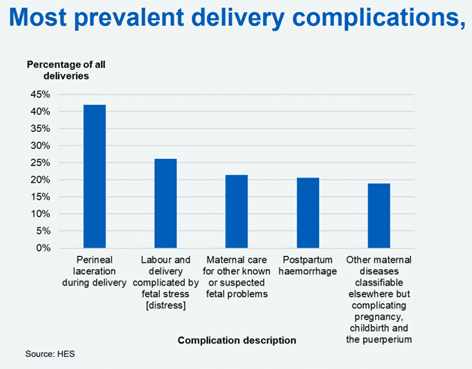
The chart below notes the most common complications associated with childbirth in NHS England between 2018-191.
Assessing birth injuries and their consequences
A serious birth injury to a mother, child or both, could result in:
- Pain, both short and long-term
- Impaired function of a limb, organ or other part of the body
- The need for further surgery and medical treatment
- The need for specialist resources eg physiotherapists, psychologist, speech and language therapists, carers, occupational therapists
- Loss of income – both current and in the future, loss of employment prospects, career progression and pension contributions.
Injuries to a mother
Women can also experience a wide range of complications and injuries associated with pregnancy and childbirth. These include, but are not limited to:
- Tears or lacerations to the perineal and surrounding areas (they range from 1st to 4th degree in their severity) and negligent repair of these injuries
- Postpartum infection, sepsis or haemorrhage
- Damage to the nerves, uterus, fallopian tubes and other organs associated with negligent surgery
- Damage to the bladder or blockage of the large intestine (Ogilvie’s syndrome)
- Pre-Eclampsia
- Failure to monitor effects of medication
- Ruptured placenta or uterus
- Post-traumatic stress disorder (PTSD) resulting from a painful or traumatic birth. Some symptoms of PTSD can be overlooked or confused with post-natal depression as they include emotional distress, irritability and trouble sleeping. However PTSD can also include severe depression, hyper vigilance and flashbacks.
A serious birth related injury could result in severe physical and emotional damage to a woman and prevent her from returning to work for some time (if at all). This this may also affect her chances of promotion and career development.
Injuries to a baby could include:
- Brain damage due to a drop in oxygen or glucose
- Physical injuries eg. spine, nerve damage, shoulder dislocations
- Fractures
- Infections due to lapses in medical care
- Facial scaring, bruising and nerve damage eg. associated with a negligent forceps delivery
Because a child’s body is growing and developing, the full extent of negligent care during birth may not be fully apparent until they reach their early teens/adulthood. If the damage or injury is severe and impacts upon their mental and psychological development, the child may not be able to work and therefore require lifelong care and financial support.
Obtaining justice and compensation for mother and child
Medical professionals owe a “duty of care” to the mother and child. This requires them to act to the highest standards of their profession, to take maximum precautions and to ensure that the correct procedures have been followed. In the event that they have not done so, it may have caused an injury and therefore a medical negligence case may be made.
Obtaining the truth about a medical error ensures that the medical staff involved are held accountable. Lessons must be learned so that other women and babies do not suffer as a result of these same mistakes.
In order to find out what went wrong during your delivery and why events occurred as they did, the following steps could be taken:
- Request a meeting with the medical staff involved. We recommend that you prepare a list of questions and take a partner or friend to the meeting. A hospital’s Patient Advice and Liaison Service (PALS) can often provide a representative to support you.
- You may also wish to make a complaint to the hospital. The hospital will initiate a formal NHS complaints investigation once they receive your letter and should provide a full response to your questions and the concerns raised. It is recommended that you make the complaint within one year of the incident, if possible.
- You may also decide to bring a legal claim for compensation. If you would like to make a claim it is recommended that you contact solicitors experienced in dealing with birth injuries and complex financial compensation claims i.e. for long-term care, complex care and medical needs, loss of earnings, promotion prospects and lost pension contributions.
If you are considering a legal claim, it is useful to prepare:
- A brief background and history of events
- Details of the staff involved
- A file containing medical records
- A file containing all bills, receipts, related expenses and estimated financial losses
Compensation for the injuries, is an acknowledgement that the medical care fell below acceptable standards and can provide the resources to rebuild your health. It will also help secure financial support for you and/or your child and family if you are unable to return to work or if you or your child requires long-term care and medical treatment.
Time limits
A 3 year time limit applies to all medical negligence cases, which is set out in the Limitation Act 1980. This means that generally a person has three years from the date of the birth injury or alleged negligence (or from the date you were made of aware of the alleged harm or negligence) within which to make a legal claim for compensation.
There are a few exceptions to the three year rule:
- A claim for a child can be made at any time before their 18th birthday. After the child turns 18 they will have three years within which to make a claim in their own name.
- If a child or adult lacks mental capacity, there may be varying time limits. We suggest that anyone who thinks they may have a claim should seek legal advice as soon as possible.
Improving medical care for mothers and babies
Unfortunately medical staff make mistakes. However by highlighting these mistakes and making a complaint you could help prevent the same thing happening to other women and their children.
Acknowledgment of the error is the foundation of seeking justice for the harm you or your baby received. Financial compensation is the next stage as it is this that reflects the extent of your injuries, your financial losses and the resources required to rebuild your health, your emotional wellbeing and your financial security.
Author and medical negligence expert: Karen Cathcart
Karen Cathcart is a medical negligence solicitor at Devonshires Claims. Karen works in all areas of medical negligence, however, she has specific experience of dealing with surgical errors, misdiagnosis of illnesses to include cancer, birth injuries either by way of incorrect procedures during labour or as a result of medication prescribed during pregnancy causing birth defects. For more information on birth negligence claims please visit: https://www.devonshiresclaims.co.uk
References



0 Comments